Coronavirus elderly advice: How can I look after my older relatives?

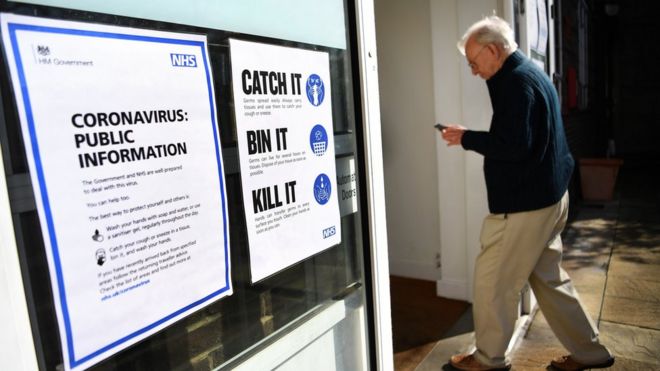
An elderly man walks into a NHS centre testing for coronavirus London"It just gets into my head - is it better not to go because you don't know if you are bringing germs?"
Caroline, from south-east England, is one of many people who are concerned about visiting elderly relatives in the midst of the UK's coronavirus outbreak.
Until now Caroline, who has asked us not to use her surname, has been visiting her sister, who is living with dementia and in a care home. But now she says she is "not sure" whether she should continue her visits in case she spreads the virus inadvertently.
Older people are more likely to become severely ill if they catch it, the NHS says. Generally, it says anyone over the age of 65 is considered an "older person" but there is no strict definition as people age at different rates.
But what measures are being taken and what advice is there for looking after older and elderly people?

What are care homes doing?

Care homes have responded in a mix of ways so far, with some residential and nursing homes deciding to restrict visitors.
Barchester Care Homes, which has more than 11,000 residents spread across more than 200 homes in the UK, is asking family members and friends to "minimise" their visits.
In a letter to residents and visitors, it says it has not taken the decision lightly and appreciates it may cause some discomfort. But "this is a necessary step to take", it adds

Comments

Popular posts from this blog

Coronavirus: 'The worst bit is the uncontrollable coughing'

"The worst bit is the uncontrollable coughing," says Andrew O'Dwyer, who is recovering after being infected with the new coronavirus following a skiing trip to Italy in late February. "I've had worse flu, without a doubt - but I wouldn't want to catch it again," he says during his self-isolation at home in south-west London. Despite having type 1 diabetes, Andrew says having the virus "isn't anything to worry about for me personally". He adds that the fever he experienced is "no different to normal flu-type symptoms". "I've not been concerned," he says. The severity of symptoms can vary widely among people. Those who are older and have pre-existing medical conditions (such as asthma, diabetes, heart disease) are more likely to become severely ill and can need hospital treatment. There have been 10 coronavirus-related deaths so far in the UK. Andrew was told the virus wasn't circulating in the resort ...

Babajide made a Stunning Revelation about the Forthcoming Governorship Election in Edo State

Babajide a veteran journalist, while speaking on the popular program “Journalist Hangout” on TVC news Friday August 7, made a stunning revelation about the forthcoming governorship election in Edo state, says all political parties should shown violence because election is not a do or die affair. Babajide while reacting said “ I have to say I have my fears about these forthcoming election, and I hope my fears does not come past. As we can see the shenanigans in Edo state it is now visible that it is no more Oshiomole against Obaseki, it is now PDP against APC which could be devastating in the light of the politics going on now. Obaseki himself divided the APC, because all the lawmakers in Edo state belong to the APC but he divided them by inaugurating some lawmakers, and refusing to inaugurate others. Right now as it stands 17 lawmakers have decided to align with the APC and just 7 lawmakers is with the Governor. For me I think Obaseki should have averted these problem by just issuing a...

7 Ways to boost your brain

When it comes to mental endurance, there are a few ways to ensure a sharp mind and excellent concentration. Peter Jordan, Principal Officer of Fedhealth, explains that nutritionists emphasise the importance of healthy eating habits at such a particularly stressful time. “They advise that the right food and drink can energise your system, improve your alertness and sustain you through the long exam hours. On the other hand making the wrong dietary choices could leave you feeling jittery, sluggish or burned-out.” 1. Don’t skip meals For one, it’s important to make sure to eat. Even if you’re feeling nervous or nauseous, your brain needs the energy from food to work efficiently and stave off fatigue. However it is important to ensure it’s a light meal so you don’t feel too full. If you eat a big breakfast or lunch before an exam, you could feel drowsy and heavy, because your body’s energy is being channelled to the digestive system rath...