
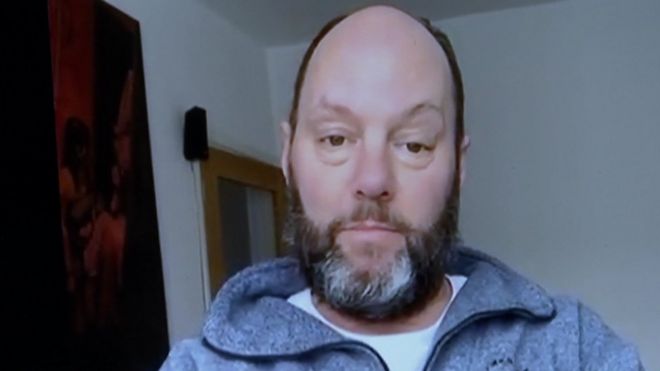
 "The worst bit is the uncontrollable coughing," says Andrew O'Dwyer, who is recovering after being infected with the new coronavirus following a skiing trip to Italy in late February.
"I've had worse flu, without a doubt - but I wouldn't want to catch it again," he says during his self-isolation at home in south-west London.
Despite having type 1 diabetes, Andrew says having the virus "isn't anything to worry about for me personally".
He adds that the fever he experienced is "no different to normal flu-type symptoms".
"I've not been concerned," he says.
The severity of symptoms can vary widely among people. Those who are older and have pre-existing medical conditions (such as asthma, diabetes, heart disease) are more likely to become severely ill and can need hospital treatment. There have been 10 coronavirus-related deaths so far in the UK.
Andrew was told the virus wasn't circulating in the resort he was staying in, but 21 out of 25 people in his skiing group have since become infected.
On his return from Italy to the UK, he decided to stay at home and self-isolate as a precaution, despite experiencing no symptoms at that point.
'Debilitating cough'
Some people in his group fell ill within two days, so he contacted NHS 111, which he says was "very good".
"I got tested before I was feeling ill because other people had tested positive.
"I found out three days later I was positive. But it was over a week before I showed symptoms," he says.
They included a "quite debilitating cough" and a high temperature that kept rising and falling.
He says he found that taking paracetamol really helped to reduce his fever.
At one point he had to go to hospital in an ambulance for an assessment.
He was checked over but didn't have to get out. Then he was dropped off at home again.
Andrew is now on the road to recovery - but it's been a long haul.
By the end of his self-isolation he will have spent 21 days at home, without going out.
He's also been trying to work from home but has found it difficult to concentrate.
"It's like climbing the walls. It's difficult to do a day's work," he says.
On a positive note, he says his friends have been very good, helping him with shopping. However he's really missed his nine-year-old son, whom he hasn't seen for two weeks.
Comments