 Image Credits: Matthew Horwood / Getty Images (Image has been modified)
European on-demand food delivery startups are starting to add “contactless’ deliveries in response to the SARS-CoV-2 pandemic.
Earlier this month U.S. startups, including Postmates and Instacart, added an option for customers to choose not to have their meal handed to them by the courier — and instead have it dropped off at their door without the need for human contact. In China similar services began adding contactless deliveries last month.
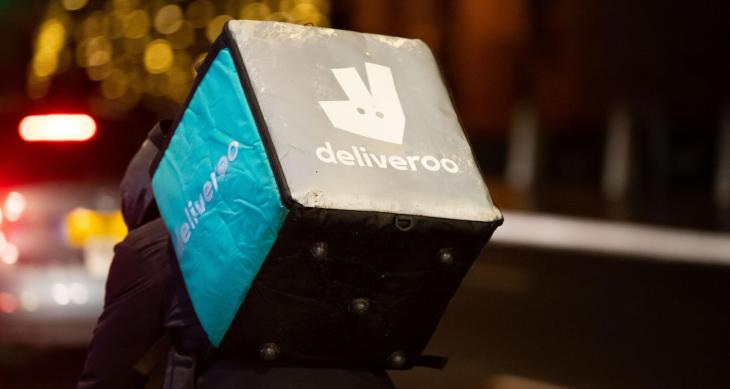
Today U.K.-based Deliveroo said it will launch a no-contact drop-off option early next week.
“At Deliveroo we are taking action to keep our customers, riders and restaurants safe. To make our delivery service even safer we are introducing a no-contact, drop-off service,” it told us.
Currently, Deliveroo customers not wanting to expose themselves — or, indeed, the courier delivering their food — to unnecessary human contact can add a note to an order to request a no-contact drop-off.
According to the latest World Health Organization (WHO) situation report on COVID-19, the U.K. had 373 confirmed cases and six deaths as of yesterday.
Deliveroo told us it has plans in place to respond should a rider be diagnosed with the virus or be told to isolate themselves by a medical authority. This includes a multi-million-pound fund that it said will be used to support affected riders by paying in excess of the equivalent of U.K. statutory sick pay for 14 days.
Other steps it’s taking include ordering hand sanitizer for riders and setting up a dedicated support team in each market to answer any queries or questions riders have.
“Riders’ safety is a priority and we want to make sure those who are impacted by this unprecedented virus and cannot work are supported. Deliveroo will provide support for riders who are diagnosed with the virus or who are told to isolate themselves by a medical authority,” the company added.
In yesterday’s budget the U.K. chancellor set out measures intended to support gig workers during the COVID-19 crisis, announcing a £500 million boost to the benefits system and steps to make it quicker and easier for self-employed people to access social security — a move unions were quick to characterize as a sticking plaster atop the systemic problem of precarious gig work.
“It is unfortunate that it takes a global health pandemic for this government to recognise that precarious workers need some form of sick pay,” said the Independent Workers Union of Great Britain’s general secretary, Jason Moyer-Lee, in a statement. “Rather than half-baked proposals on benefits, the government should be ensuring that all workers have properly enforced worker rights, including full sick pay from day one. The unaffordability of becoming ill or injured is something precarious workers face on a daily basis, and it needs a permanent solution.”
Over in the European Union, Spain’s Glovo also told us it’s implementing new measures globally from today — including recommending “no contact” deliveries and removing the requirement for couriers to obtain a mobile signature from the customer.
Italy, the European country most severely affected by the novel coronavirus outbreak thus far, is one of Glovo’s biggest markets.
This month the government announced a nationwide lockdown to try to contain the spread of the virus. Per the WHO, Italy had 10,149 confirmed cases of COVID-19 as of yesterday morning and 631 people had died.
Yesterday the Italian prime minister announced a further tightening of quarantine rules, closing all bars and restaurants to the general public but allowing for home delivery — leaving the door open for meal delivery startups to continue operating. Food stores in Italy have also not been shut.
A report by UBS today looking at the impact of COVID-19 on online food delivery across multiple markets suggests there is a general uptick in meal delivery demand in most markets, including Italy. Though the investment bank cautions this could change — highlighting the risk of supply disruption and the consumer safety concerns related to eating pre-prepared meals during a health crisis, as it says has been the case in China (with grocery delivery growing as meal delivery orders slumped).
It’s not clear how Glovo’s on-demand business is weathering the coronavirus storm. A spokesman told us it’s unable to share any data regarding the rise/fall of orders in Italy during the quarantine.
It’s worth noting the startup has never been solely focused on meal delivery — with the app supporting requests for anything (practicable) to be delivered by bike courier in the urban centers where it operates.
Groceries have also been a growing area of focus for Glovo, which has been building out a network of dark supermarkets to support fast delivery of convenience shop groceries.
When we asked it about support for riders, Glovo told us it will be covering courier incomes for 2-4 weeks during the COVID-19 outbreak if they report being sick.
“The health and wellbeing of our couriers and customers is our top priority and we think these practices will help give some peace-of-mind to our fleet, while also decreasing the interaction and contact between both parties,” said the spokesman.
We also asked Uber Eats — which operates a meal delivery service in multiple markets across Europe — what measures it’s taking to respond to the COVID-19 pandemic.
A spokeswoman told us it’s currently working to inform customers of an existing ability to communicate with delivery people via the app to give them specific guidance on where and how they’d like deliveries made — such as leaving a note to say ‘leave at door’ or ‘leave in lobby/reception.’
“Safety is essential to Uber and it’s at the heart of everything we do. In response to the ongoing spread of coronavirus, we’ve reminded Uber users that they can request deliveries be left on their doorsteps,” Uber Eats said in a statement.
“We’re simultaneously at work on new product features to make this process even smoother, which we hope will be helpful to everyone on the platform in the coming weeks,” it added.
Uber also confirmed it will compensate drivers and delivery people who have to go into quarantine for up to 14 days — provided they are able to show documentation confirming the diagnosis; or if they have to self isolate or get removed from the app at the direction of a public health authority.
The company added that it has a dedicated global team, led by SVP Andrew Macdonald and advised by a consulting public health expert and public health organizations, working on its COVID-19 response.


Comments